


Understanding personality differences is one of the most powerful ways to improve communication and collaboration in the workplace. A DISC personality assessment provides a practical framework for exploring these differences through structured DISC personality analysis.
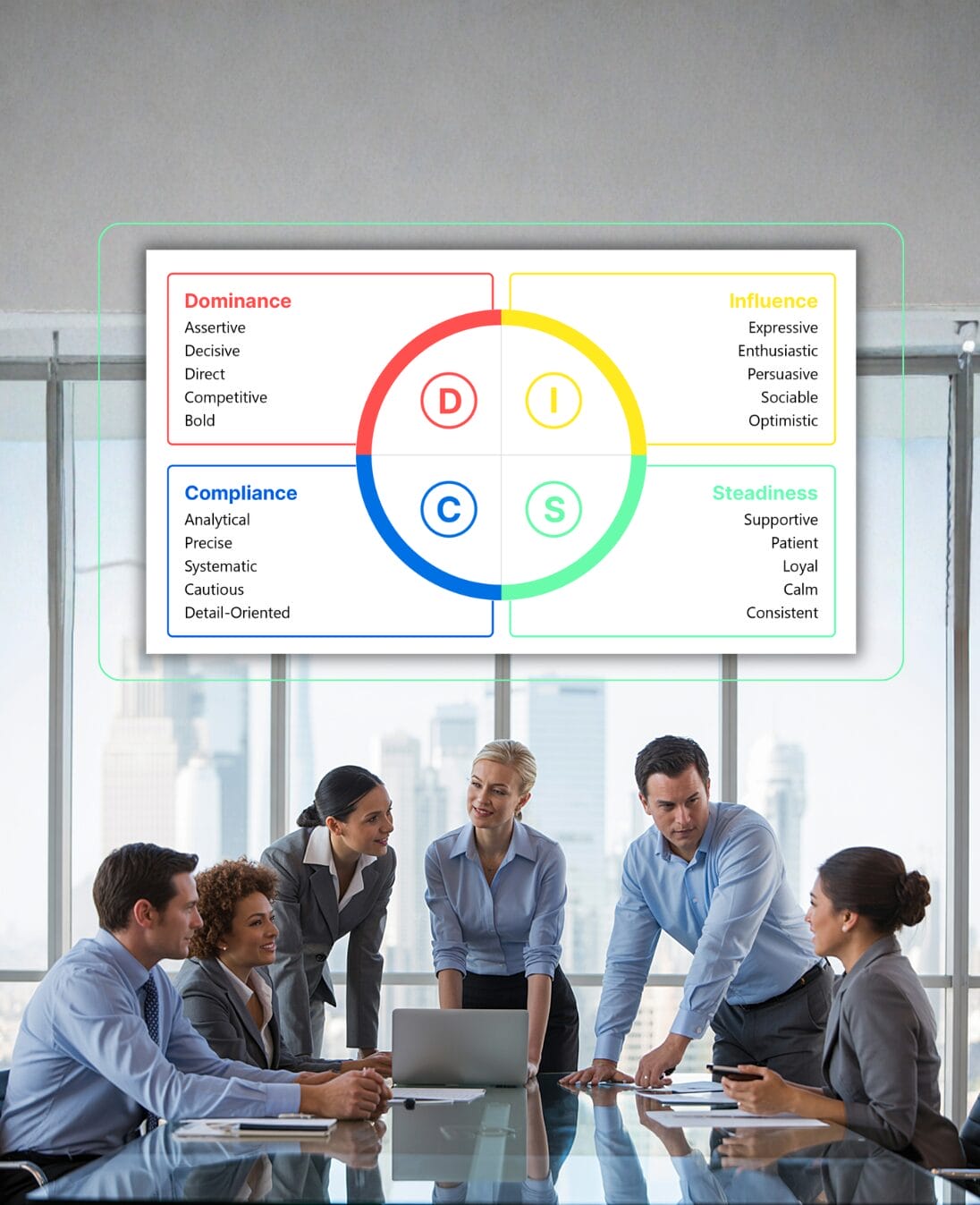
The DISC model explained in simple terms, identifies four key behavioral tendencies that shape how individuals work, communicate, and respond to challenges. These 4 DISC personality types—Dominance, Influence, Steadiness, and Compliance—form the foundation of widely used workplace personality frameworks.
By understanding DISC profiles, teams can better interpret behavior, reduce misunderstandings, and improve collaboration across different working styles.
Dominance Behavioural Tendencies (D)
Individuals with strong Dominance tendencies often prioritize results, action, and decisive leadership. Within DISC behavior styles explained, this type is typically associated with directness and a focus on outcomes.
Common characteristics include:
- Confidence in decision-making
- Focus on results and progress
- willingness to address challenges directly
These behaviors help organizations maintain momentum, especially in fast-paced environments. However, their direct DISC communication styles may sometimes feel abrupt to others.
Influence Behavioural Tendencies (I)
Individuals with strong Influence tendencies bring enthusiasm and energy to team interactions. In DISC personality types, this style is often linked to communication, persuasion, and collaboration.
Common characteristics include:
- Strong interpersonal communication
- Enthusiasm and optimism
- Ability to inspire others
These individuals energize teams and encourage idea generation. However, discussions may occasionally lack structure without clear direction.
Steadiness Behavioural Tendencies (S)
Steadiness-focused individuals prioritize cooperation, consistency, and supportive relationships. As part of the DISC personality analysis, this type reflects a preference for stability and teamwork.
Common characteristics include:
- Patience and reliability
- Supportive communication
- Preference for steady progress
These behaviors create strong team cohesion. However, rapid change or lack of consultation may create discomfort.
Compliance Behavioural Tendencies (C)
Individuals with strong Compliance tendencies value accuracy, structure, and analytical thinking. In DISC behavior styles explained, this type is associated with precision and quality control.
Common characteristics include:
- Attention to detail
- Analytical problem-solving
- Preference for clear processes
These individuals help maintain high standards, though decision-making may take longer when detailed analysis is prioritized.
Why DISC Personality Types Matter in the Workplace
Understanding DISC personality types helps teams interpret behavior more accurately. Without this awareness, differences in DISC communication styles can lead to misinterpretation.
For example:
- A direct communicator may be perceived as confrontational
- A reflective communicator may appear disengaged
- An analytical communicator may seem overly cautious
A structured DISC personality assessment helps teams recognize that these behaviors reflect different working styles rather than negative intent.
DISC in Leadership and Team Development
The DISC model explained has been widely adopted in leadership development and organizational learning. Organizations such as Discflow have brought DISC personality analysis to a global audience.
Modern behavioral intelligence platforms like Discflow build on this foundation by integrating behavioral insights with emotional intelligence and practical development tools. This evolution helps organizations move beyond theory into applied workplace transformation.
Final Thoughts
The 4 DISC personality types provide a clear and practical way of understanding DISC profiles in the workplace. By recognizing how different behavioral tendencies influence communication and decision-making, teams can collaborate more effectively.
When combined with emotional intelligence and modern development platforms, the DISC personality assessment becomes a powerful tool for building stronger leadership capability and high-performing teams.