

DISC and Hiring: What the Model Can and Can’t Tell You

Every week, hiring managers search some version of the same question: can we use DISC for hiring? It usually comes from a good place. A bad hire has just cost the team a year, or a technically brilliant candidate turned out to be unmanageable, and behavioral assessment looks like the missing filter. The honest answer […]
Reading Your Buyer’s Style in the First Five Minutes

In our guide to selling to DISC styles, we made the case that buyers buy in four recognizably different ways and that most lost deals are style collisions, not product failures. Which raises the obvious practical objection: it’s all very well knowing how a C buyer decides, but your prospects don’t arrive with a profile […]
DISC Team Building Activities That Actually Change Behaviour

Team building has a reputation problem, and it earned it honestly. The trust falls, the escape rooms, the raft made of barrels — activities that lift the mood on the day and change nothing by Monday, because they were never connected to how the team actually works. People enjoy them, roughly, and trust them not […]
The Reflection Loop: How Insight Becomes Behaviour Change

Earlier this month we made an argument that resonated with a lot of people in learning and development: assessment insight fades — predictably, on a schedule — because the industry built the measurement layer and never built the application layer. That piece named the problem. This one names the mechanism that solves it, because the […]
How to Become DISC Certified: What It Involves and What It Unlocks
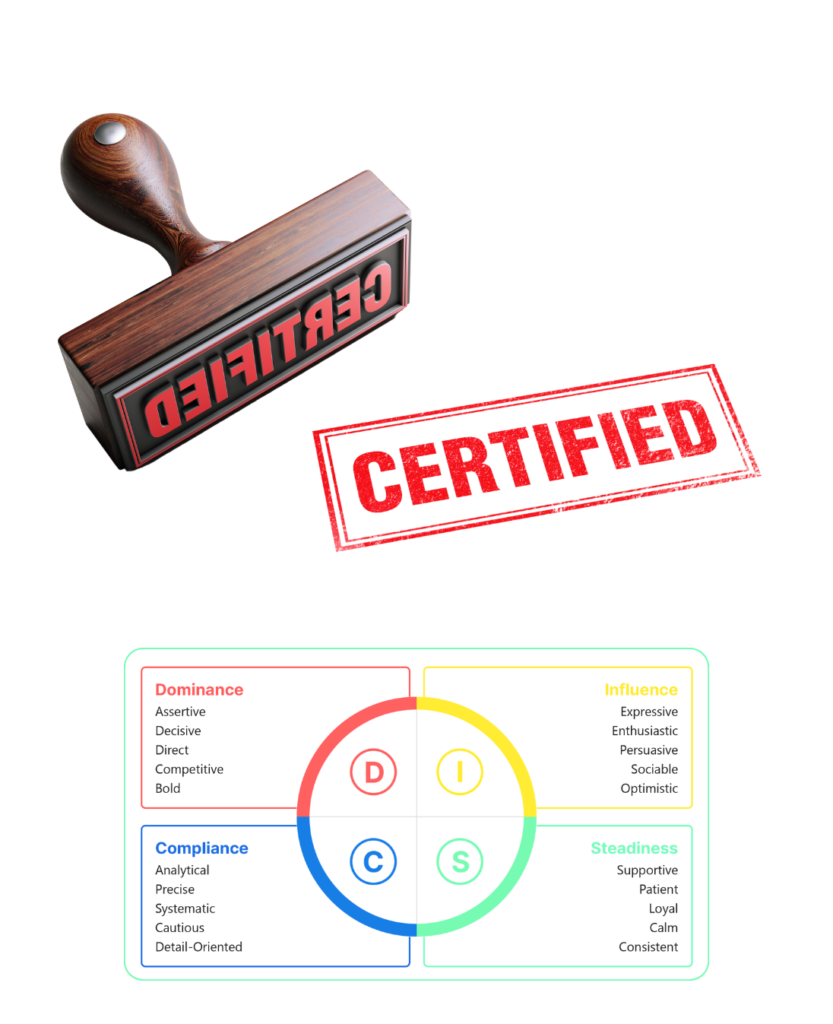
If you are a coach, consultant, or HR professional, the question of DISC certification usually arrives the same way: a client engagement that would clearly benefit from behavioural assessment, and the realisation that you would rather deliver it yourself — credibly, independently, and as part of your own offer — than refer it out. What […]
Running a Team Workshop with DISC: A Practical Framework

There are two kinds of DISC team workshop. In the first, a team spends a pleasant day discovering their styles, laughing at how accurately their colleagues have been described, and leaves with a warm glow and a set of reports. In the second, the same team leaves with something operational: a shared picture of what […]
Leading Each DISC Style: A Manager’s Guide

Most managers lead the way they would like to be led. It is rarely a conscious decision — it simply feels like good management, because it is precisely the management that would work on them. The high-D manager gives everyone autonomy and stretch and cannot understand why half the team seems rattled. The high-S manager […]
DISC and Emotional Intelligence: Why You Need Both

The world of people development has, broadly, two camps. One reaches for behavioural models — DISC most commonly — and talks about styles, preferences, and profiles. The other reaches for Emotional Intelligence and talks about self-awareness, empathy, and regulation. Each camp tends to regard the other’s toolkit as the lesser one: the EI people find […]
Why Assessment Insight Fades and What Makes It Stick

Everyone in learning and development knows this moment, even if nobody enjoys naming it. The workshop lands. The reports are uncannily accurate. People talk about their styles over lunch, laugh at how precisely their colleagues have been described, and leave genuinely energised. Two weeks later, the reports are in a drawer, the language has faded […]
How to Give Feedback to Each DISC Style
Most feedback training teaches a single method. Structure it this way, sandwich it that way, anchor it in behaviour, deliver it promptly. All sensible, and all built on a quiet assumption that turns out to be false: that the same well-constructed sentence lands the same way on everyone who hears it. It doesn’t. Say “I […]