


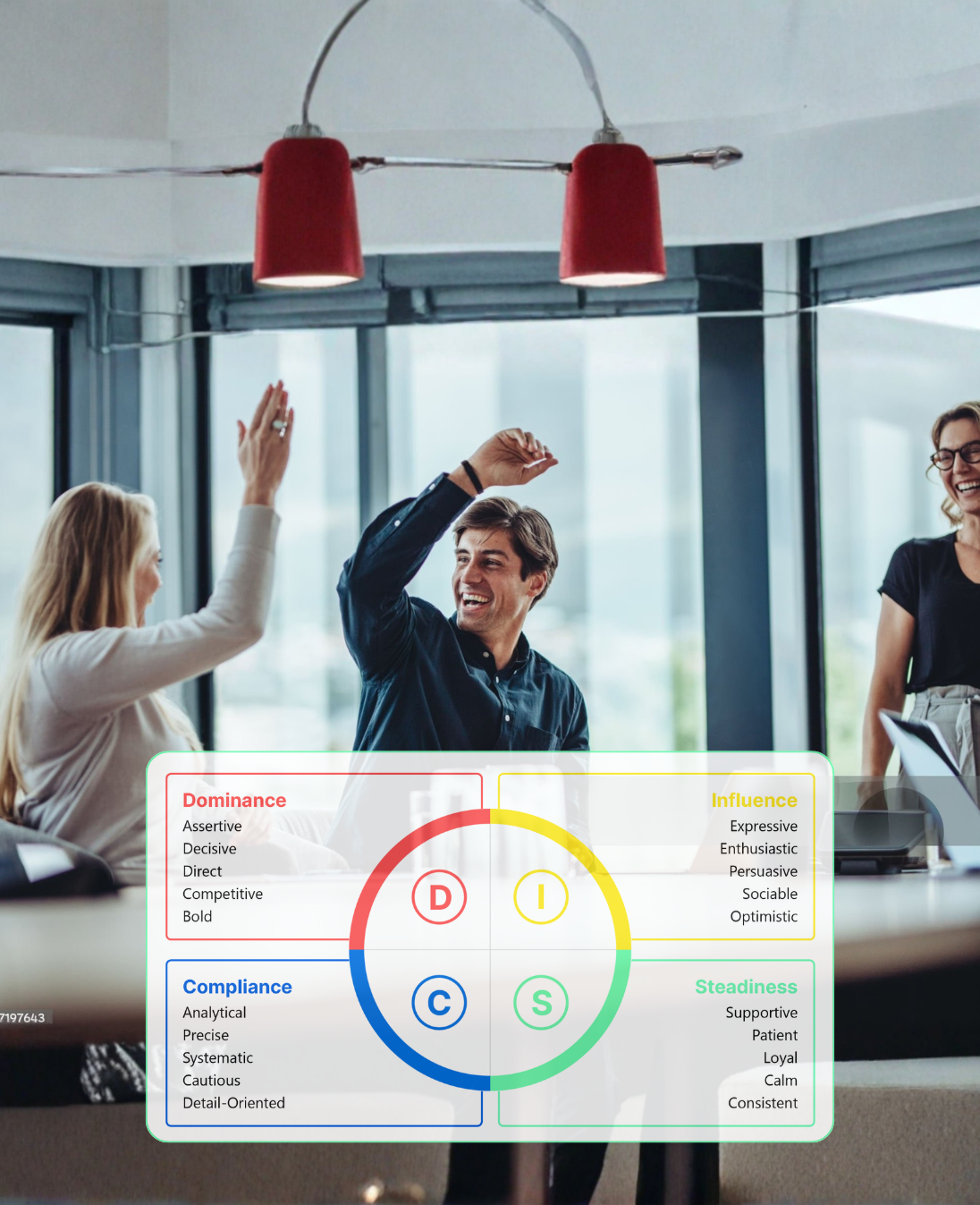
Switching the behavioural tool your organization relies on is a bigger decision than it first appears. A DISC assessment is rarely just a report; it is often woven into onboarding, leadership development, coaching, and the shared language your teams already use. Moving providers without thinking it through can quietly cost you all of that. Done carefully, though, a move can leave you better supported than before.
Organizations look for a DISC assessment alternative for all sorts of reasons: a provider changes its model or pricing, support falls away, a contract becomes restrictive, or the tool simply stops keeping pace with what the organization needs. Whatever the trigger, the same question applies. How do you move without losing what was working, and ideally gain something in the process?
Why organizations switch DISC providers
The reasons tend to fall into a few groups. Sometimes it is commercial: pricing rises, terms tighten, or a provider changes the way it sells in a way that no longer suits how you buy. Sometimes it is practical: the support that made the tool useful thins out, or the assessment is not available in the formats or languages a growing organization needs. And sometimes it is strategic: the organization has moved on, and wants a behavioural tool that does more than describe people, one that helps them change. This is often the point at which a DISC assessment alternative moves from idea to active search.
None of these is a small matter, because a behavioural assessment that is genuinely embedded touches a lot of people. It usually sits at the heart of employee development, from onboarding through to leadership coaching, so the decision deserves the same care as any other change to the systems your organization depends on.
What you stand to keep, and what you risk losing
Before moving, it helps to be clear about what is actually at stake. The valuable things are rarely the reports themselves. They are the shared language your teams have built, the historical data you have gathered, the people you have certified to deliver the tool internally, and the continuity of an approach your organization already understands. A poorly planned switch can put all of these at risk at once.
The good news is that none of them needs to be lost. With the right provider and a sensible transition, you can carry the value forward, keep your certified people supported, and move to a tool that fits better, without starting from zero.
What to check before you move
A few checks separate a smooth move from a costly one. Run through them before you commit to any new provider.
Validity and rigor. Make sure any new assessment is properly built and validated, with psychometric assessment documentation behind it. A psychometric assessment that looks similar on the surface is not necessarily as sound underneath, so ask to see the evidence.
Continuity for your people. If you have certified trainers or practitioners, check how the new provider supports them. A good transition recognizes existing expertise rather than forcing everyone to requalify from scratch.
Support and application. Ask what happens after the report. The best providers do not just hand over a document; they support the application of the insight, which is where behaviour actually changes and where lasting employee development comes from.
Pricing and terms. Look for transparent pricing and terms that suit how you buy, with no surprises and no lock-in that simply recreates the problem you are trying to leave.
A clean transition. Finally, ask how the move itself will be handled: how your teams will be brought across, and how continuity will be maintained while you switch.
Questions worth asking a new provider
Once you have a shortlist, a handful of direct questions will tell you most of what you need to know. Ask how the assessment was validated, and whether the documentation is available to see. Ask how existing certified practitioners are brought across, and what it costs them. Ask what support exists after the report, and whether application is built in or sold separately. Ask how pricing works at the volumes you actually use, and what the contract commits you to. And ask, plainly, how the transition itself is handled.
A provider confident in their tool will answer all of these readily. Hesitation on any of them, particularly around validation, continuity, or what happens after the report, is worth noting before you commit.
The question most people forget
There is one question that matters more than any feature comparison: what happens after the assessment. Most DISC tools end at the report. Insight is delivered, and then left to fade. If you are going to the trouble of switching providers, it is worth choosing a DISC assessment alternative that closes that gap, rather than simply swapping one report for another.
An assessment that supports application, helping people use the insight in real moments rather than recall it occasionally, is worth far more over time than one that only describes. It is also what turns a behavioural tool into a genuine engine for employee development. If a move is on the table anyway, this is the upgrade worth making.
Making the move without disruption
A change like this works best when it is planned rather than rushed. Map where the current tool is used across the organization, so nothing is missed. Bring your certified people in early, since they are the ones who will carry the new approach. Run a small pilot before a full rollout, to build confidence and surface any issues while they are still easy to fix. And keep the shared language consistent through the transition, so the change feels like an upgrade rather than an upheaval.
Handled this way, a switch need not be disruptive at all. Teams keep working, the language they rely on stays intact, and the organization ends up on a footing that suits it better.
Why this is an opportunity, not just a risk
It is easy to approach a switch defensively, focused only on avoiding loss. But a move is also a rare opportunity to upgrade. Most organizations adopted their current behavioural tool years ago and have never formally reviewed whether it still fits. A switch forces exactly that question, and often reveals that what once met the need now only partly does. Approached this way, changing providers becomes less a disruption to manage and more a decision to get right.
A safe, well-supported alternative
Discflow is built for exactly this kind of move. As a DISC assessment that combines DISC with emotional intelligence, it gives a fuller behavioural picture, and supports application through FlowHub and FlowConnect rather than ending at the report. For organizations leaving a provider that no longer fits, it offers a stable, well-supported home, with continuity for certified people and a sensible transition rather than a disruptive one.
If you are weighing up a DISC assessment alternative, the practical next step is a conversation about where you are now and what you need. Talk to our team, and we will help you map a move that keeps what is working and improves what is not.
Switching providers is not just about replacing a report. Done well, it is a chance to move from understanding behaviour to actually changing it.