


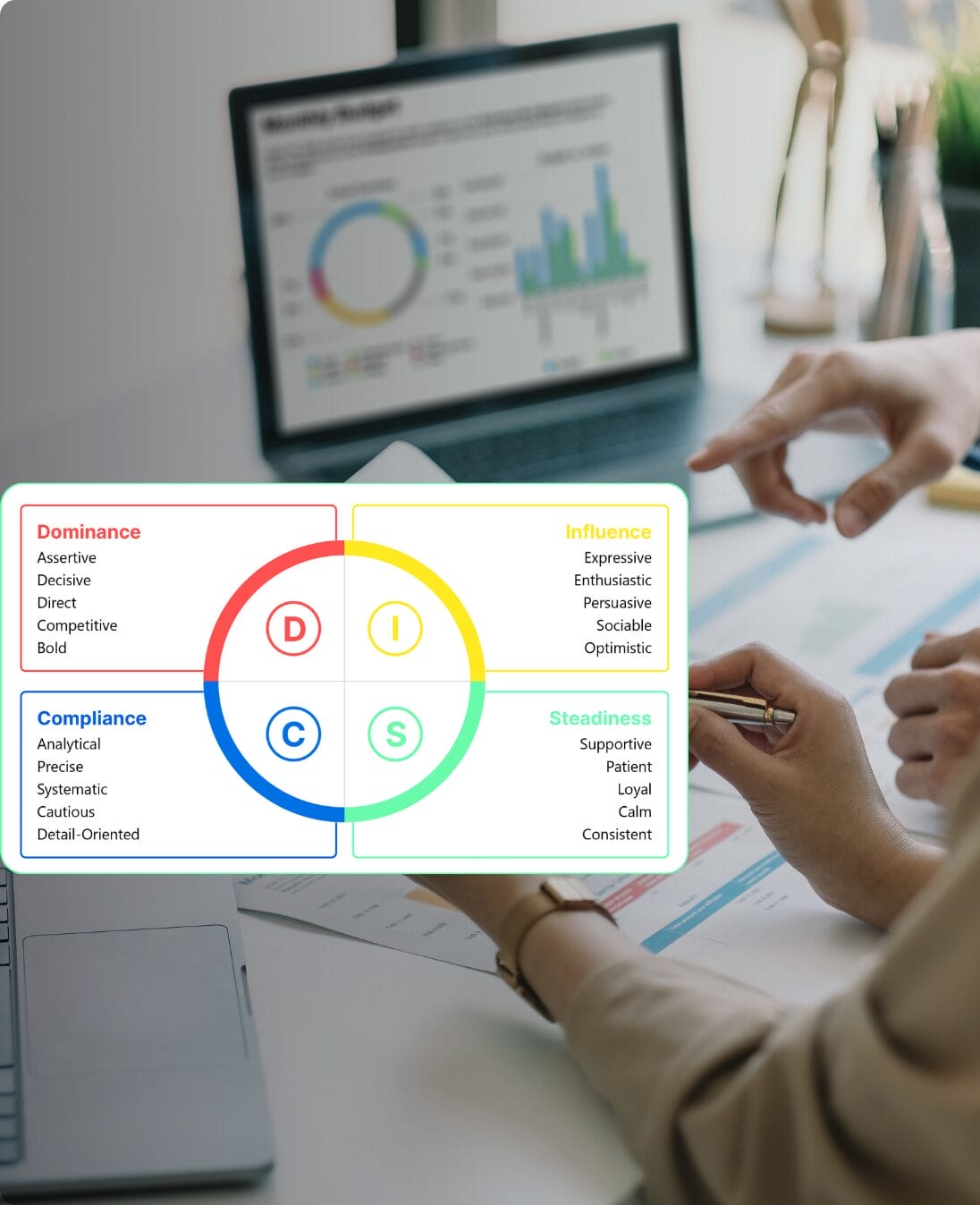
A DISC assessment is a simple, practical tool that measures how an individual prefers to behave using the four‑style DISC model. The DISC model itself is a behavioral framework that groups observable behavior into four core styles—Dominance, Influence, Steadiness, and Compliance, while the DISC assessment turns that framework into a personalized report leaders and HR teams can apply in real conversations, coaching, and development programs.
For HR and people leaders, tools such as the DISC personality assessment offer a clear and accessible way to explore how behavioral differences influence communication, decision‑making, and workplace relationships. This is especially valuable in the context of DISC training for HR and people professionals, where understanding people dynamics is essential for building high‑performing teams and shaping culture. As a result, DISC assessments have become a core component of many modern HR and leadership development strategies.
Yet despite its popularity, many organizations still ask a fundamental question:
What exactly is a DISC assessment, and how should it be used within leadership and team development programs?
Understanding how the DISC personality assessment works and where it adds the most value helps HR leaders use the tool more effectively in talent management, leadership development, and everyday people decisions.
The Origins of the DISC Model
The DISC model is rooted in the work of psychologist William Moulton Marston, whose early behavioral research explored how individuals respond to their environment and to other people. Marston focused on patterns in how individuals approach challenges, influence others, respond to pace and pressure, and relate to structure and rules.
These behavioral tendencies later formed the basis of the DISC personality framework, which describes four broad behavioral styles:
- Dominance
- Influence
- Steadiness
- Compliance
A DISC assessment does not measure intelligence, values, or technical competence. Instead, it focuses on observable behavioral tendencies, how someone tends to act and react at work, which makes it especially useful when using DISC in HR strategy to shape communication, collaboration, and leadership culture.
The Four DISC Behavioral Styles
The DISC personality assessment describes four core behavioral tendencies that influence how individuals communicate, make decisions, and work with others, a crucial insight for managers and team leaders.
Dominance (D)
People with strong Dominance tendencies often prioritize results, decisiveness, and forward momentum. They are likely to favor:
- Direct, to‑the‑point communication
- Fast decision‑making
- Clear outcomes and goals
This style can support fast‑paced environments and decisive action, but it may sometimes come across to others as abrupt or overly forceful if not balanced with emotional awareness and active listening.
Influence (I)
Individuals with strong Influence tendencies often bring energy, enthusiasm, and optimism to team interactions. They typically enjoy:
- Collaborative discussion
- Sharing ideas openly
- Motivating and persuading colleagues
This style is particularly valuable when the focus is on engagement, communication, and building buy‑in across teams. At times, however, conversations may drift away from detail or follow‑through if not anchored in clear priorities and accountability.
Steadiness (S)
People with strong Steadiness tendencies often value cooperation, stability, and supportive relationships. They tend to prefer:
- Collaborative decision‑making
- Steady, predictable progress
- Consistent, low‑conflict environments
This behavioral style supports team cohesion, follow‑through, and psychological safety and is highly relevant for improving retention, employee experience, and change adoption. At the same time, S‑style individuals may avoid conflict, hesitate to speak up, or resist rapid change, which can leave issues unaddressed or slow down decisions in fast‑moving environments if not managed consciously.
Compliance (C)
Individuals with strong Compliance (or Conscientiousness) tendencies often prioritize accuracy, analysis, and structured problem‑solving. They usually look for:
- Detailed information and clear expectations
- Logical reasoning and evidence
- Careful, methodical decision‑making
This style is particularly useful in roles that depend on precision, quality, and risk management, and is often highlighted in leadership development when improving process design and decision quality. However, C‑style individuals can sometimes overanalyze, delay decisions while seeking more data, or come across as overly critical or detached, especially in high‑pressure or fast‑changing situations.
How DISC Is Used in Organizations
Because it focuses on observable behavior, the DISC assessment is widely used across organizations, particularly within HR, L&D, and leadership development functions. Common applications include:
- Leadership development workshops and coaching
- Team communication and collaboration training
- Conflict resolution and difficult‑conversation support
- Management training that helps leaders understand and flex their DISC style
- Structured DISC training for HR and people professionals to embed the framework into talent processes
For many organizations, using DISC in HR strategy means building a shared, neutral language for behavior that can be used in recruitment, onboarding, performance conversations, and succession planning.
By introducing that shared language, the DISC personality assessment helps teams discuss communication styles and working preferences more constructively instead of reducing issues to “personality clashes.” Many organizations also use a DISC assessment as part of leadership programs, giving managers a clearer view of their default approach to directing, coaching, and giving feedback, and how that lands with different styles on their teams.
DISC and Team Communication
One of the most valuable contributions of DISC assessment is helping teams see how behavioral differences influence everyday communication. For example:
- Some team members communicate directly and concisely.
- Others prefer discussion, reflection, and consensus.
- Some are most comfortable with detailed information and data.
- Others focus on high‑level outcomes, vision, and impact.
For leaders, understanding these patterns is essential when designing teams, managing change, or coaching managers through communication challenges.
Many organizations now use DISC with managers specifically to strengthen communication at the leadership level, helping leaders tailor how they share information, delegate, and give feedback to different styles, rather than relying on a single default approach.
The Evolution of DISC and Behavioral Intelligence Tools
Historically, DISC assessments have been delivered through development tools and programs provided by assessment companies. These have helped scale across organizations worldwide, supporting both DISC training and broader leadership development initiatives.
More recently, newer behavioral intelligence tools such as Discflow have expanded this approach by integrating DISC behavioral insight with emotional intelligence indicators and practical workplace guidance. Instead of stopping at “here is your style,” these tools focus on questions like:
- How do others experience my behavior under pressure?
- What adjustments will make this conversation more effective with this person?
- How can I apply my DISC profile in real coaching, feedback, or conflict situations?
Tools like Discflow reports build on the traditional DISC assessment by offering both DISC‑only profiles and DISC‑plus‑emotional‑intelligence insights, giving HR leaders flexible options for different stages of leadership and team development. For example, Discflow Core 2.0 blends DISC with emotional intelligence to help individuals understand not just how they behave, but why they react the way they do under pressure, while Discflow Leader 2.0 goes deeper for managers and leaders, adding insight into how they make decisions, delegate, motivate others, and lead people with different DISC styles.
This evolution helps organizations use DISC in HR strategy more effectively, moving beyond one‑off workshops toward ongoing, situational application in leadership, team, and talent decisions.
Where DISC Fits in HR and Leadership Development
A DISC assessment remains one of the most widely used behavioral tools in leadership and organizational development. For HR, L&D, and people leaders, it offers a structured yet practical way to understand behavioral dynamics within teams and across the organization.
Organizations that combine the DISC personality assessment with practical development initiatives, such as DISC training for HR, managers and leadership development programs, and day‑to‑day DISC‑based coaching are better placed to:
- Strengthen everyday communication and collaboration
- Build leaders who adapt their style rather than expecting others to adapt to them
- Embed behavioral insight into hiring, development, and succession planning
If you are exploring how to bring DISC into your HR and leadership development strategy, Discflow reports offer a suite of DISC assessments designed for individuals, leaders, and teams. Combining clear behavioral insight with emotional intelligence to turn insight into everyday behavior change across your organization.